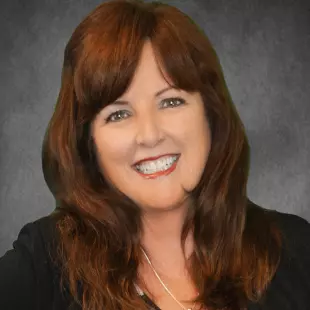
Beyond the Sale: How Cheryl Coleman Built a Real Estate Business Around People, Purpose, and Legacy

From navigating a housing crisis to building a thriving team and becoming a familiar face
throughout Huntington Beach, Cheryl Coleman's story is about much more than selling homes.
When Cheryl Coleman moved from Virginia to Southern California, she was a single mother with
two young children, an impressive corporate résumé, and virtually no local connections.
She had served as a vice president of sales and marketing, negotiated international business
deals, and invested in real estate since she was a teenager. But starting over in a new market
was another matter entirely.
She remembers the uncertainty of those early days, including moments spent wondering
whether her real estate career would ever take off.
Today, after building a successful real estate business, a recognizable community presence,
and a team she is preparing to lead into the future, Cheryl looks back on that decision with a
mixture of pride and disbelief.
"I pinch myself every day that I am where I am today," she says.
Her journey offers a lesson for anyone who has achieved success in real estate but wonders
what comes next: There's a difference between making a great living and building something
that lasts.
Finding Opportunity When Others Saw a Crisis
Cheryl's introduction to real estate came almost by accident.
As a college student needing an additional class, she enrolled in real estate—not because she
wanted to sell homes, but because she wanted to buy them.
By age 17 or 18, she had purchased her first house. Over the years, she would buy
approximately 40 properties, developing an investor's understanding of real estate long before
making it her profession.
After relocating to California for her corporate career, she became frustrated by her experiences
as a homebuyer.The agents she encountered were pleasant, but she felt something was missing: business
acumen.
With her background in sales, marketing, and negotiations, she believed she could bring
something different to the profession.
She earned her California real estate license shortly before the housing market collapsed.
While other agents struggled and many left the industry, Cheryl discovered an opportunity to put
her negotiating experience to work helping distressed homeowners.
She became involved in foreclosure sales and quickly recognized how devastating the process
could be for families.
Rather than simply completing transactions, she looked for ways to make difficult circumstances
less painful.
She recalls approaching homeowners with a bottle of wine from Trader Joe's, sitting down with
them, and helping negotiate financial assistance so they could find somewhere else to live.
She subsequently developed expertise in short sales, negotiating with banks and other
institutions to help homeowners resolve overwhelming financial obligations.
Some of those homeowners remain her clients today.
"I made a bad thing good," she says.
It became a defining philosophy for her career: Help people first. Build the business around that.
When Being a Successful Agent Wasn't Enough
As her business grew, Cheryl recognized something that many productive agents eventually
confront.
There are only so many hours in a day.
She hired an assistant in her second year and began thinking about adding buyer's agents. But
the brokerage where she worked had a problem with her ambitions.
Its business model was built around individual agents, not teams.
Despite being one of its highest-producing agents, Cheryl was told she couldn't build the team
she envisioned. So she left. Keller Williams offered something she had been looking for: an environment where building a
business beyond her own individual production wasn't just permitted—it was encouraged.
But even with years of corporate leadership experience, Cheryl discovered that running a
successful real estate practice required a different set of skills.
"I was in business. I was vice president. I ran corporations, but I never ran my business," she
explains.
That distinction changed the way she approached her future.
Learning to Build a Business, Not Just Sell Real Estate
One of the most influential resources in Cheryl's development was The Millionaire Real Estate
Agent (MREA), written by Keller Williams co-founder Gary Keller with Dave Jenks and Jay
Papasan.
Cheryl calls it "the encyclopedia for realtors."
The book lays out models for building a real estate business through intentional growth,
organizational structure, systems, and leverage.
For Cheryl, its value went beyond learning how to produce more sales.
It helped her focus on building a business that could grow beyond her personal capacity.
As her production increased, Cheryl also qualified to participate in coaching sessions with Gary
Keller alongside other top-producing Keller Williams agents.
These opportunities, available to select high-level producers rather than the broader agent
population, gave her access to advanced business thinking and the perspective of someone
who had helped build one of the industry's largest real estate organizations.
"Gary Keller helped me make a business,
" Cheryl says.
His influence also extended to how she thought about money.
Real estate can produce extraordinary income, but income and wealth are not the same thing.
Cheryl learned the importance of saving, investing, and preparing for the inevitable fluctuations
in the market.
She has experienced both exceptional production years and slower ones. The difference today
is that a difficult year doesn't threaten the financial security she's worked to create.
"I could retire today,
" she says.For Cheryl, that's a different definition of success than simply having another record-breaking
sales year.
Building the Right Team Takes More Than Hiring Good
People
Cheryl's journey from individual producer to team leader hasn't been without mistakes.
She readily acknowledges that her desire to help people sometimes influenced hiring decisions
more than it should have.
She has learned that liking someone and having confidence in their ability to perform a role are
two very different things.
In one recent hiring decision, she found herself drawn to a candidate's personality. Another
candidate, however, demonstrated a much clearer understanding of what the business needed
and how to execute it.
The lesson was familiar: Hire for the work that needs to be done, not simply the person you
enjoy talking to.
Cheryl considers tools such as the Keller Personality Assessment (KPA) when evaluating
candidates, alongside their skills, behavior, and cultural fit.
She also believes in taking time to determine whether someone is truly right for the team.
"One bad applicant spoils a whole bunch,
" she says.
But for Cheryl, the most important hiring criterion isn't found on a résumé.
It's a shared commitment to serving people.
She expects her team members to care about their clients before worrying about their
commissions.
That philosophy has helped shape the culture of the business she's building—and the people
she hopes will eventually lead it.
Becoming Part of the Community, Not Just Marketing to It
When Cheryl first arrived in Huntington Beach, she didn't have a local sphere of influence.
So she built one.She joined approximately eight networking groups, attended community events, knocked on
doors, and looked for ways to make herself useful.
Over time, those efforts became something much bigger than traditional prospecting.
Her neighborhood directories and annual restaurant guides became resources residents looked
forward to receiving.
Her community forum, which has operated for approximately 20 years, brings residents together
to learn, share ideas, and discuss issues affecting their neighborhoods.
Topics range from home improvements and financial education to health and safety.
The forum has even helped community members organize around local concerns.
For Cheryl, the purpose is simple: Bring people together and provide something valuable.
The business relationships follow naturally.
Her philosophy of community engagement reflects the same principle that guided her work with
distressed homeowners years earlier.
Don't begin by asking what someone can do for you.
Begin by asking what you can do for them.
These days, Cheryl can hardly go anywhere in Huntington Beach without someone recognizing
her. She recalls a trip to Staples when the employee at checkout suddenly exclaimed,
"Oh my God, you're Cheryl Coleman! I sit on your bus bench every day!"
Cheryl's response? "That's wonderful! Would you like to buy a house?"
She laughs at the memory, but the moment illustrates just how far she's come. The woman who
once knew almost no one in town has become someone the town knows.
What began as a necessity—getting to know people in a city where she had virtually no
connections—became one of the foundations of her business.
The Next Chapter: Building Something That Can Continue
Without Her
After years of working long days, Cheryl is beginning to think differently about her time.
She's proud of the business she's created, the financial independence she's achieved, and the
opportunities she's been able to provide for her family.But she also wants more freedom to enjoy what she's built.
That means developing the next generation of leadership within her team.
She's mentoring agents who share her values and bringing one of them along on appointments
so they can learn firsthand how she works with clients and manages relationships.
It's a new kind of challenge.
Building a successful real estate career required Cheryl to become exceptionally good at what
she did.
Building a lasting business requires her to help other people become exceptionally good at what
they do.
And she's discovering that she loves that part just as much.
"When they get a paycheck, I'm just as happy, maybe happier than when I get [one],
" she says.
For someone who began her career determined to help people through some of the most
difficult moments of their lives, perhaps that shouldn't be surprising.
The desire to help hasn't changed.
Only the scale of what's possible has.
A Different Measure of Success
Cheryl's story isn't simply about production, properties, or professional recognition.
It's about what those accomplishments have made possible.
A single mother who arrived in California knowing almost no one built a career, a business,
financial security, and a place for herself in the community.
Along the way, she learned to think beyond the next transaction, surround herself with the right
people, and use the business models and mentorship available through Keller Williams to build
something bigger than herself.
Today, she's thinking about the next generation of people who will carry that work forward.
And when she reflects on everything she's accomplished, the emotion is still close to the
surface.
"I still can't believe I did this," she says.
Perhaps that's the most meaningful part of Cheryl Coleman's success.She built a business that changed her own life.
Now she's building one that can keep changing other people's lives, too.
Categories
Recent Posts





GET MORE INFORMATION